Some products are marketed so well that everyone wants to try them.
Then everyone wants their money back.
Others are genuinely good products that never get the chance, simply because nobody understands why they should care.
That’s the uncomfortable thing about marketing. It can make a bad product famous, but it can’t make customers love it. And a great product can sit quietly, unnoticed, without the right story around it.
We’ve seen both happen more than once.
New Coke had one of the biggest marketing machines in the world behind it, Volkswagen built a luxury car with the engineering to compete in the premium segment. And Betamax, despite having technical advantages, still lost the format war.
Then there are products that seem almost too ordinary to become remarkable, yet somehow manage to do exactly that.
So what separates them?
Is it the product? The marketing? The brand? or The market itself?
Usually, it’s more complicated than any one of those things.
Because a product doesn’t succeed simply because it’s good and marketing doesn’t succeed simply because people notice it.
What happens between those two things is where the interesting story begins.
When the product itself becomes the problem
Take New Coke.
In 1985, Coca-Cola changed the formula of one of the most recognizable products in the world. This wasn’t a reckless gamble made without research. Coca-Cola says the new formula had been preferred in taste tests involving nearly 200,000 consumers.
Consumers rejected it anyway.
The backlash was so strong that Coca-Cola brought the original formula back just 79 days later.
The interesting part is that Coca-Cola wasn’t struggling to make people aware of Coke. The company was trying to solve a different problem: consumers were becoming less enthusiastic about the brand.
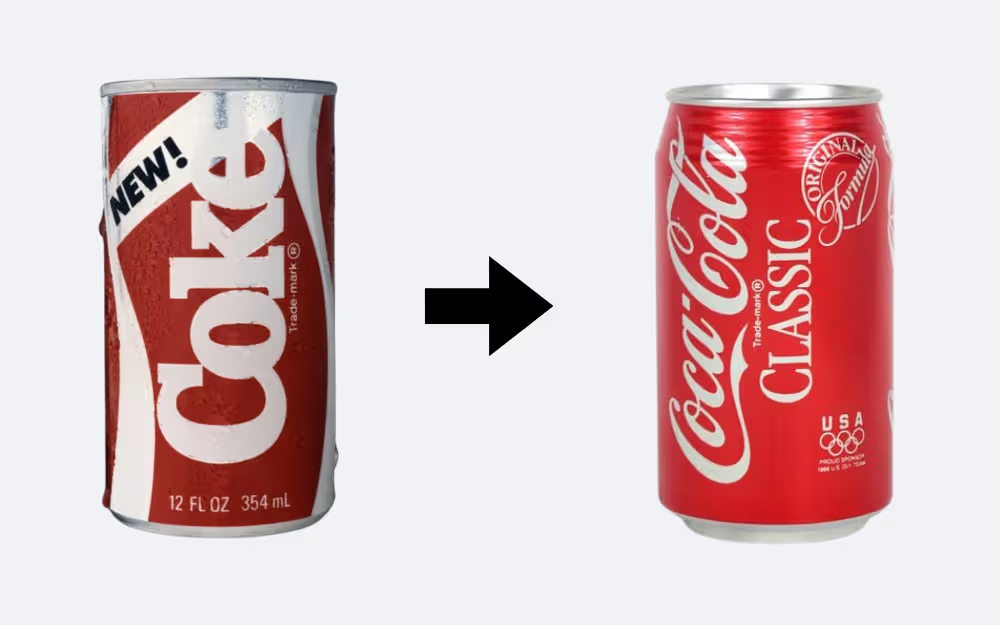
The research found a taste preference for the new formula. What it didn’t capture was the attachment people had to the old one and Coca-Cola itself later acknowledged that the tests hadn’t shown the bond consumers felt with their Coke.
People weren’t simply drinking a soft drink. They had years of memories, habits and associations wrapped around it.
That is what makes New Coke more interesting than a simple story about a failed product launch.
The company had evidence that the new formula could work.
It had the marketing power to introduce it.
What it underestimated was what people thought they were losing.
No campaign could make consumers stop caring about that.
When the experience exposes the products
Apple’s Magic Mouse creates a very different problem.
Apple has built an enormous amount of trust around design and usability. That means customers don’t just buy the product; they arrive with expectations about how the product should work.
The Magic Mouse has one particularly awkward design decision: its charging port is on the underside. More importantly, Apple’s own support documentation confirms that the Magic Mouse is unavailable for use while charging. Apple Support – Magic Mouse charging
It is a small flaw in an otherwise polished product.
But small flaws become more noticeable when they contradict what people expect from a brand.
Apple doesn’t have to tell customers that its products are thoughtfully designed. Years of products have already done that work.
So when a basic interaction feels inconvenient, the disappointment isn’t just about the mouse.
It’s about the gap between the promise of the brand and the reality of using the product.
That is something marketing can’t permanently smooth over.
Eventually, the customer stops seeing the product through the campaign and starts experiencing it for themselves.
And that experience is often the most persuasive piece of marketing a product will ever have.l
When the packaging gets in the way of the product
Heinz ketchup had a simple problem: getting the ketchup out of the bottle wasn’t always easy.
The familiar bottle was recognizable and loved its distinctive look,but the design wasn’t practical.Consumers had to shake, tap or wait for the ketchup to come out.
Heinz eventually introduced its upside-down squeeze bottle, changing the way people accessed the product without changing the ketchup itself.
The problem wasn’t the product, It was the journey between the bottle and the plate.
That distinction matters. Packaging isn’t just something a product sits inside. It can affect how easily the product is used, experienced and remembered.
Heinz didn’t change the bottle simply to make the product look different.
It changed the bottle because the product needed to work better.
Premium products can sometimes carry the wrong meaning
Volkswagen’s Phaeton takes the argument somewhere deeper.
Volkswagen deliberately built the Phaeton as a luxury sedan and described it as its entry into the premium segment. The company highlighted its technology, comfort and manufacturing quality. Volkswagen Newsroom – Phaeton history
So the interesting question isn’t whether Volkswagen knew how to build an expensive car.
It did.
The harder question was whether the Volkswagen name carried the meaning required for a luxury car.

For decades, Volkswagen had been associated with something different: practicality, accessibility and everyday reliability.
Those associations don’t disappear because a company puts a more expensive product in the showroom.
People aren’t only buying engineering.
They’re buying what the badge represents.
The Toyota Crown Sport illustrates the same tension from a different angle. Its aggressive design has drawn comparisons to the Ferrari Purosangue, and it is sometimes described as a “budget Ferrari.” The comparison itself is revealing.

The product can be premium without the brand being perceived as premium.
The car hasn’t necessarily changed. The meaning attached to it has.
That is one reason Toyota’s creation of Lexus was such a significant strategic move.
Rather than asking consumers to suddenly reinterpret Toyota as a luxury name, Toyota created a separate brand whose identity could be built around luxury from the beginning.
Sometimes changing the product isn’t enough.
You have to change what people believe the name attached to it means.
When being better isn’t enough
Then there is Betamax.
Sony’s Betamax had technical advantages over VHS in several respects, yet VHS eventually won the format war.
The problem was that consumers weren’t buying video technology in isolation.
They were buying recording time, availability, price, compatible machines, rental-store access and, eventually, what everyone else was using.
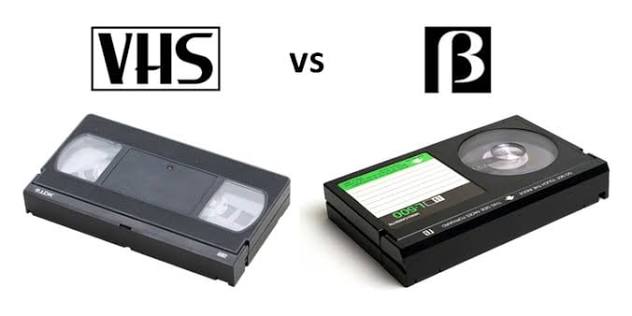
VHS benefited from broader adoption and availability. As more consumers adopted it, more content and infrastructure followed, which made VHS even more attractive.
That creates a problem that product teams can easily underestimate.
A company can spend years making something faster, smarter or technically superior while the market is making a completely different calculation.
Consumers don’t award points for engineering.
They choose what is useful, available and easy to adopt.
Sometimes the market’s favorite product isn’t the objectively best one.
It’s simply the one that fits the market better.
When marketing makes ordinary products matter
But this is where the argument needs an important qualification.
Marketing isn’t simply the thing that gets blamed when a product fails.
Sometimes, marketing is what turns an ordinary product into a remarkable brand.
Liquid Death is a good example.
At its core, the company sells water.
There is no revolutionary technology behind putting water in a can.
What Liquid Death changed was the meaning around it.
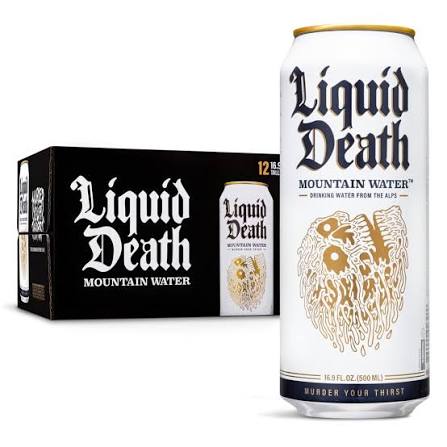
Its name, packaging, irreverent tone and heavy-metal-inspired identity made it feel completely different from the language traditionally used to sell water.
The product didn’t suddenly become more useful because of the advertising. (Liquid death)
It became more distinctive.
And that distinction matters.
When consumers have little functional reason to choose one product over another, marketing can give them another reason: identity.
You’re not just buying water. You’re buying into a brand that feels different from the alternatives.
That’s marketing doing something genuinely valuable.
It isn’t disguising a weak product.
It’s making an ordinary product easier to remember and harder to confuse with everything else.
But there is another way a product can become meaningful, and it takes much longer than a clever campaign.
When a product becomes part of the culture
Indomie is a particularly interesting example in Nigeria because its success goes beyond advertising.
Dufil’s history shows how deeply the brand became tied to local production. Its first Nigerian instant-noodle manufacturing plant began operations in Ota in 1996, and the company describes Indomie as the brand that pioneered and developed the instant-noodle market in Nigeria. (Dufil)
Over time, Indomie did more than sell noodles to Nigerians.
It built local production, distribution and a brand around the Nigerian market.
That distinction matters.
Liquid Death created differentiation around an ordinary product through marketing.
Indomie built familiarity by becoming increasingly embedded in the market itself.
Dufil describes Indomie as one of the top consumer brands in Nigeria and says it pioneered and developed the instant-noodle market.
Think about what that means.
A brand didn’t simply become one of the options in its category.
It became part of how people understand the category.
And that wasn’t created by one campaign.
It was built through years of product availability, local production, distribution, familiarity and communication.
Liquid Death shows how marketing can give an ordinary product meaning. Indomie shows what happens when that meaning is reinforced by the market itself.
That’s the difference between creating attention and building something that lasts.
So what actually makes a product successful?
Maybe the real question isn’t whether marketing can save a bad product.
It’s whether we’ve been asking marketing to do jobs that belong to the product, while expecting the product to do jobs that belong to marketing.
Marketing can create awareness. It can make an ordinary product distinctive. It can change how people perceive a category and give a product a place in culture.
But it cannot permanently compensate for an experience people don’t want to repeat.
And the reverse is just as important.
A great product can fail to reach its potential if nobody understands it, remembers it, trusts it or knows why it is different.
That’s why product and marketing were never really competing forces.
They solve different problems.
The product has to give people a reason to stay.
Marketing has to give them a reason to look.
Branding helps them recognize what they’re looking at.
Positioning gives them a reason to choose it.
Distribution makes that choice possible.
The strongest brands are the ones where those things stop working against each other.
That’s what makes these examples so different.
New Coke had the research, the product infrastructure and one of the world’s strongest marketing machines but consumers didn’t want the change.
The Magic Mouse shows how a small product decision can undermine expectations built by a much bigger brand.
Volkswagen shows that a premium product doesn’t automatically create a premium brand.
Betamax shows that technical superiority can lose to an ecosystem.
Liquid Death shows that marketing can make an ordinary product distinctive.
And Indomie shows what can happen when product, distribution and brand-building become so intertwined that a brand becomes deeply embedded in a category.
Marketing cannot make every product win.
But when the product is good, the positioning is clear, the experience delivers and the marketing gives people a reason to care, those things can compound.
A great product doesn’t just need to be good.
It needs to make sense to the market you’re asking to choose it.